stile

Buyer's guide

Sumsub Alternatives for Checks at the Risky Moment

Most teams searching for a Sumsub alternative are looking at the wrong door. Pick a vendor by where its check can fire inside your workflow, not only by how well it handles signup.

At a glance

If you are leaving Sumsub entirely, pick a full stack. If you are adding one check, you do not need a migration.

AML screening, monitoring and proof of address on one contract
Allpass.ai, Ondato or Trulioo
Business verification and ownership
AiPrise or Trulioo
A second check at the risky moment
Stile

Each vendor is described from its own site. Sources are linked in each section below.

The risk comes after onboarding

A person who passed onboarding last year proves nothing about who is changing the payout account today.

Verified accounts get sold, handed over and taken over after the KYC check is done.

The comparison below is built that way.

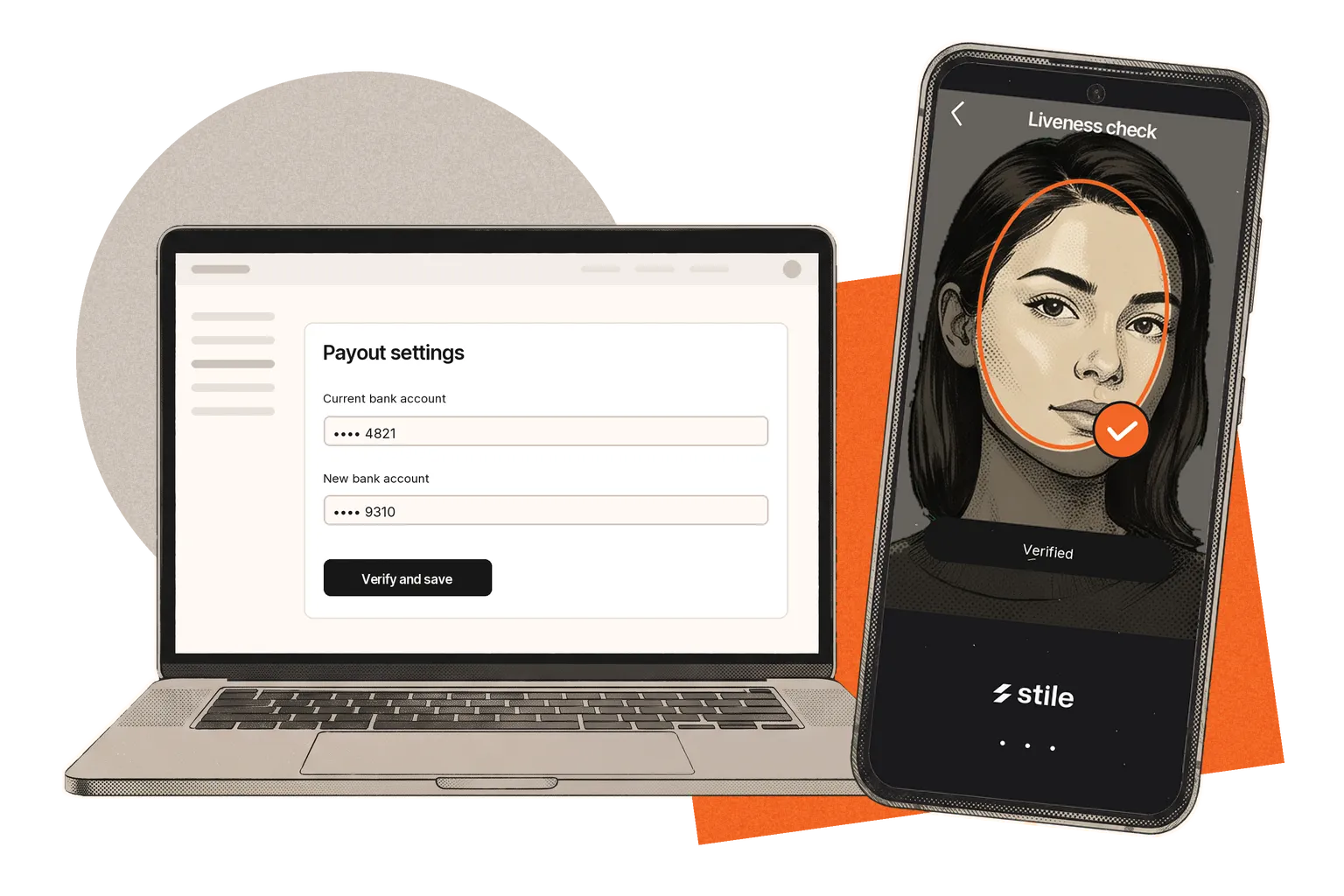
Illustration: a laptop shows a payout settings page changing the bank account from one ending 4821 to one ending 9310, beside a phone where Stile's liveness check has just verified the account holder.

Who this comparison is for

This page is for developers and compliance or security teams who already run onboarding, and possibly Sumsub.

They need an identity check at a specific risky moment:

  • Payout changes: a seller or vendor changes bank or payout details.
  • Account recovery: a user asks to recover an account after losing access.
  • Pickups: a customer picks up a high-value or age-restricted order.
  • Partner onboarding: a carrier, driver or supplier is onboarded into a logistics or marketplace workflow.

If you need a full regulated onboarding stack with AML screening, business verification and transaction monitoring in one contract, several tools here are built for that.

The sections below say which.

Why teams look past Sumsub

Sumsub covers a lot of ground. Its Non-Doc Verification page lists:

  • Products: ID verification, liveness and deepfake detection, non-document verification, reusable KYC, transaction monitoring, crypto monitoring, Travel Rule, workflow orchestration and case management.
  • Speed: its non-document check verifies identity in 4.5 seconds against government, banking and credit sources.
  • Audit: FINTRAIL audited the offering for compliance in 20 or more countries.

Breadth is the reason it lands on shortlists.

The reasons teams leave come from other vendors' framing, so read them as such:

  • Pricing tied to plans: Allpass.ai's article on Sumsub alternatives, drawing on G2 reviews, says some features such as AML screening and ongoing monitoring sit on higher Sumsub plans, so a team can end up upgrading for one feature.
  • Complexity for non-technical staff: the same Allpass.ai article reports reviewers describing a steep learning curve and compliance logic that is hard to interrogate when an auditor asks why a decision went the way it did.
  • A shift in the job: AiPrise's guide to Sumsub alternatives names four triggers: business verification becoming the main workload, documents no longer being enough against generated fakes, the full lifecycle mattering more than the onboarding flow, and expansion out of the first vertical.

One trigger neither article covers is that onboarding checks do not stop account resale.

An account that passed KYC can be sold with the passport, selfie and bank account already attached. The original holder passes every onboarding check because they are real.

The control that catches the handover is a fresh face match, compared against the person who onboarded:

  • At the first withdrawal.
  • On a new device.
  • At a payout change.

That is a check at the moment of action, and it is the gap this page is organized around.

What to compare

What to compare in an identity verification vendor

Score each vendor on these seven questions. They are the ones that decide whether a check works at a risky moment.

  • Where can the check fire?

    Only inside an onboarding flow, or from an API call, a link or a QR code at any point in your product?

  • What does the user install?

    A browser check, an embedded web flow, or a mobile SDK inside your app?

  • What comes back to your system?

    A pass or fail with evidence your existing decision engine can consume, or a case to work inside the vendor's dashboard?

  • What does the vendor keep, and what do you keep?

    ID images retained by default are a breach liability.

  • How is it priced, and can you test before a contract?

    If a workflow fires a few hundred times a month, a platform minimum is a bad fit.

  • Does it read your users' actual documents?

    Test digital national IDs, paper copies and your local driver's licenses, not the vendor's demo set. Ask which proof-of-address document types are accepted, and whether the rejection message tells the user which ones.

What else does it cover? AML screening, business verification and monitoring matter if you are replacing Sumsub entirely, and matter less if you are adding one check.

Sumsub alternatives at a glance

Sumsub alternatives at a glance
ToolWhat its site says it is built aroundChecks named on its siteHow you integratePricing on its site
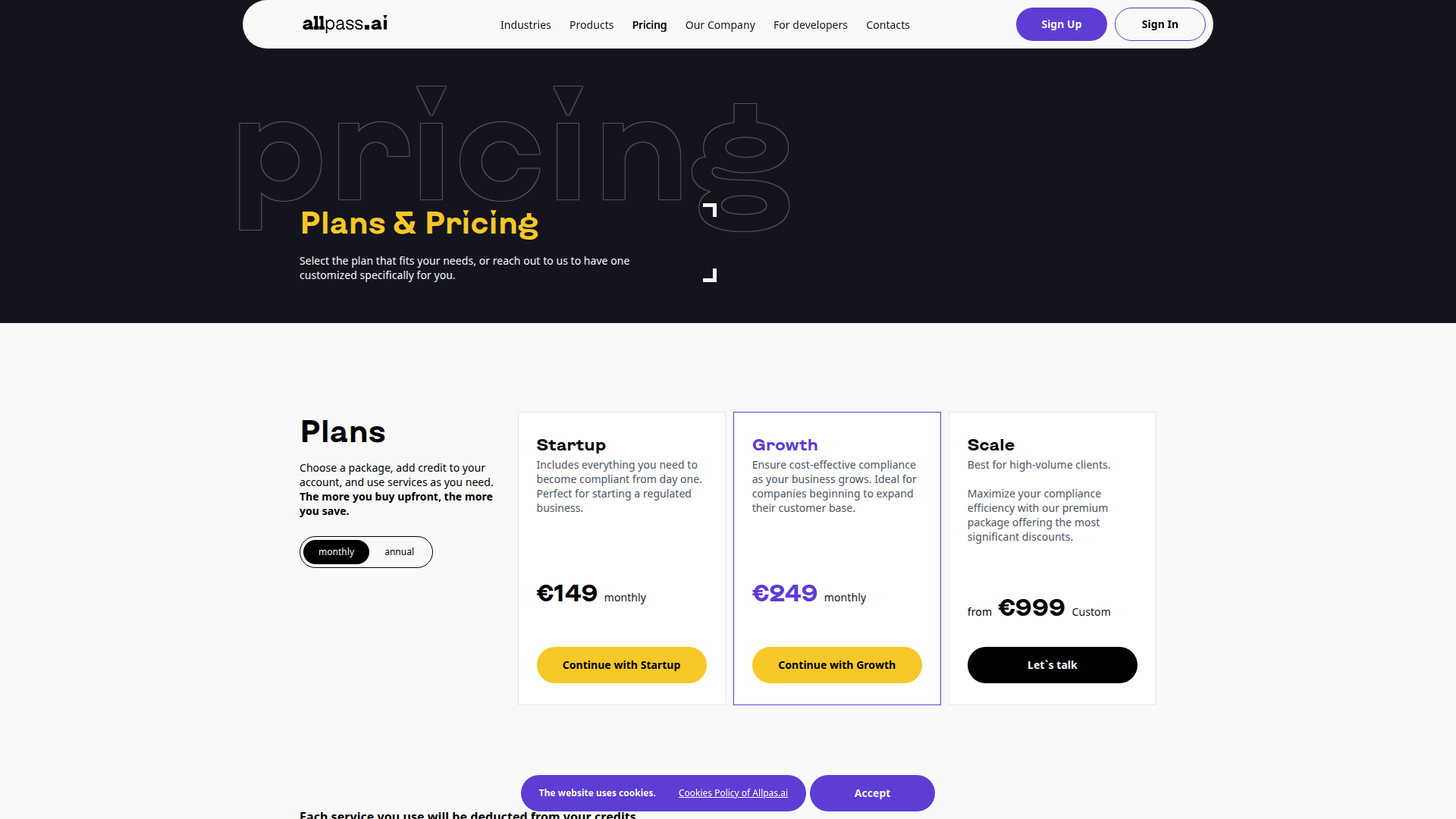
Allpass.aiAutomated KYC and AML for crypto, fintech and iGamingID verification, Liveness and face match, AML screening, Proof of address, Business verification, Crypto KYTVerification flow builder, Shared links, APIStartup $149/month, Growth $249/month, Scale from $999 (custom); per-service prices below
OndatoKYC, KYB, AML and age verification in one hubIdentity verification, NFC and video-based IDV, Reusable age verification, PEP and sanctions screening, Biometric authenticationSales-led ("Talk to sales", "Book a demo")—
PersonaIdentity platform with a versioned APIInquiries, TransactionsHosted Flow (no code), Embedded Flow for web, Mobile SDKs—
TruliooGlobal person, business and agent verificationKYC, Document verification, eID, Age assurance, KYB, UBO discovery, AML screening, Device intelligenceAPI or no-code/low-code hosted UI—
JumioContinuous identity across the customer lifecycleBiometrics, Identity verification, Risk signals, AML screening, Selfie-based reusable identitySales-led ("Contact Sales")—
AiPriseAI-powered KYB and KYC complianceBusiness and user verification, Watchlist screening, Proof of address, Government verifications, ReverificationOnboarding SDK, Workflows, API—
StileIdentity checks at the point of a risky actionDocument capture, Liveness, Face match, mDL and Apple/Google Wallet IDs, Age checksAPI call, shared link or QR code, opens in the browser$0.25 per full check, 1,000 free checks a month

The figures each vendor puts on its own site

Each figure measures something different, so these are not a ranking.

  • Coverage

    14,000+

    Document templates across 250 countries and territories

    Allpass.ai

    Allpass.ai's homepage

  • Coverage

    192

    Countries covered

    Ondato

    Ondato's comparison page

  • Coverage

    450+

    Independent data partners

    Trulioo

    Trulioo's platform page

  • Throughput

    120

    Transactions processed per second

    Jumio

    Jumio's homepage

  • Wait time

    About two seconds

    What a check takes in the user's browser, with nothing to install

    Stile

    Stile's site

What a check costs at the volumes risky moments produce

Of the tools here, Allpass.ai and Stile publish per-check prices.

Allpass.ai's pricing page sells identity verification and liveness with face match as separate services, so a document-plus-selfie check is the sum of the two.

The table assumes every check is a document check with liveness and face match, and leaves out AML screening and the other add-ons.

Allpass.ai's per-service rates

Monthly billing, from its pricing page.

Allpass.ai's per-service rates
ServiceStartup ($149/month)Growth ($249/month)Scale (from $999)
ID verification$0.69$0.49custom
Liveness and face match$0.39$0.25custom
Unique identity check$0.19$0.15custom
AML screening$0.59$0.39custom
Ongoing AML monitoring$0.39 per month$0.37 per monthcustom
Proof of address (document)$0.49$0.39custom
Supportemailemail/chat—

Monthly cost of document, liveness and face match checks at four volumes

Monthly cost of document, liveness and face match checks at four volumes
Checks per monthStile ($0.25 each, first 1,000 free)Allpass.ai at Startup rates ($1.08 per check)Allpass.ai at Growth rates ($0.74 per check)
300$0$324$222
1,000$0$1,080$740
2,500$375$2,700$1,850
5,000$1,000$5,400$3,700

Before you budget:

  • Usage only: Allpass.ai's figures are per-check usage only.
  • Packages and credits: Allpass.ai describes its plans as packages you add credit to, with each service deducted from those credits, so ask Allpass.ai how the $149 or $249 package relates to the credits.
  • AML screening: Allpass.ai includes AML screening on every plan, and the other columns do not price it. If you need screening, add it to the comparison at the rates above.

Allpass.ai

Allpass.ai's homepage calls it "the easiest fully automated KYC/AML tool".

  • Coverage: 14,000+ document templates across 250 countries and territories.
  • First try: it claims 95% of users are verified on the first try.
  • Products: ID verification, liveness and face match, AML screening, proof of address, business verification, crypto KYT, AML outsourcing, and email and phone verification.
  • Plans: its article on Sumsub alternatives says every plan includes the full feature set and that tiers differ only by verification volume.
  • Getting started: build a flow, send users a link, review applications manually, then move to the API when volume grows.
  • Company: founded in Ukraine in 2021. Its pricing page lists offices in Kyiv, Tallinn and Wrocław.

Allpass.ai's pricing page, as of October 25, 2026.

Fits when: you are a European regulated business that wants KYC, AML screening and proof of address in one place, with prices you can read before a call.

Allpass.ai's pricing page

Ondato

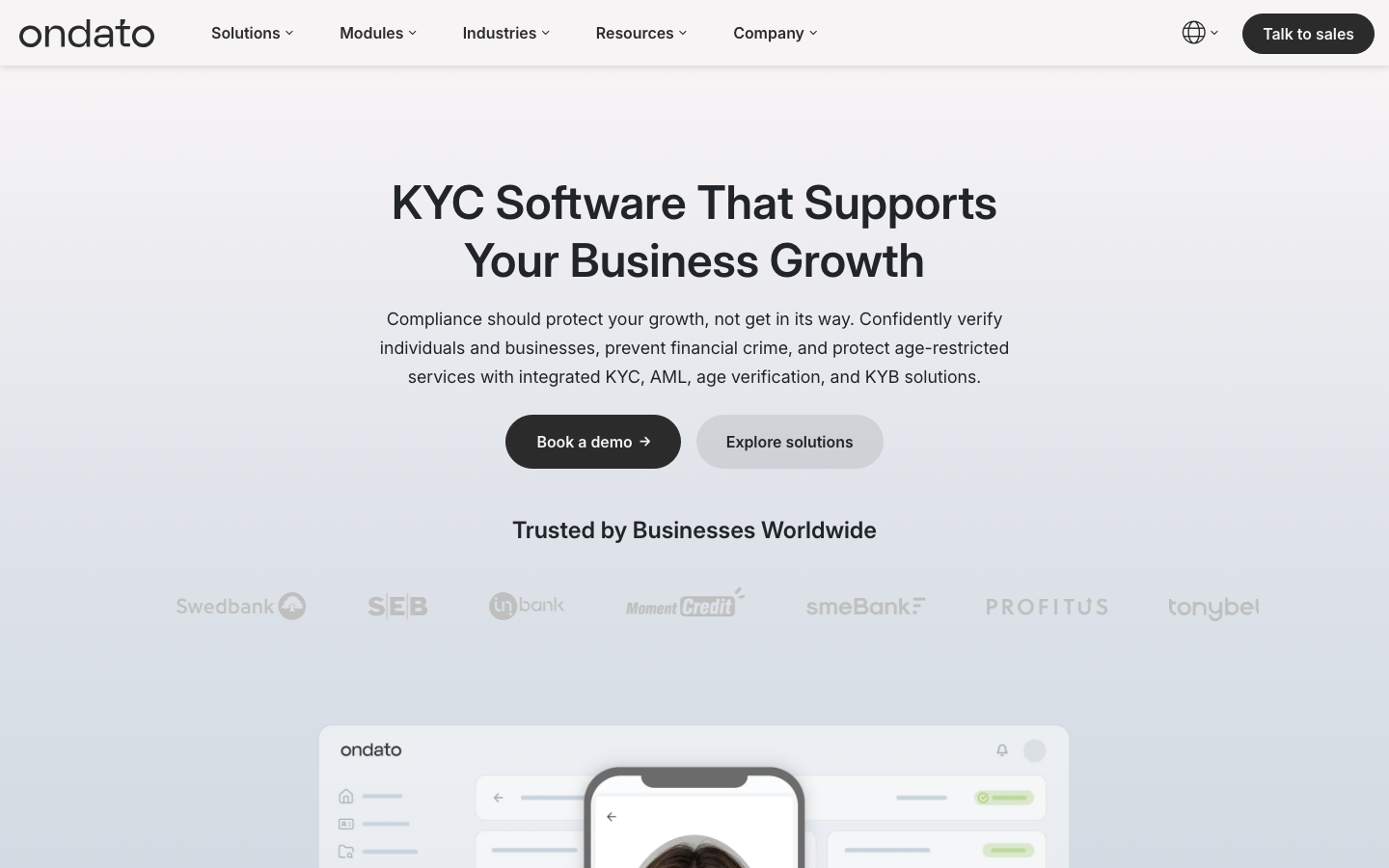
Ondato's homepage presents integrated KYC, AML, age verification and KYB.

  • Modules: NFC identity verification, video-based assisted verification, reusable age verification (OnAge), customer due diligence and sanctions screening, e-signature and biometric authentication.
  • Coverage: its comparison page says Ondato covers 192 countries, and that its OCR reads more than 10,000 document templates across 186 countries.
  • Support: 24/7, according to the same page.
  • Cost: the same page claims Ondato lets businesses cut KYC-related costs by 90%.

Fits when: you want KYC, KYB and AML in one hub with a sales-led rollout, and you value NFC chip reading or video identification.

Ondato's homepage

Persona

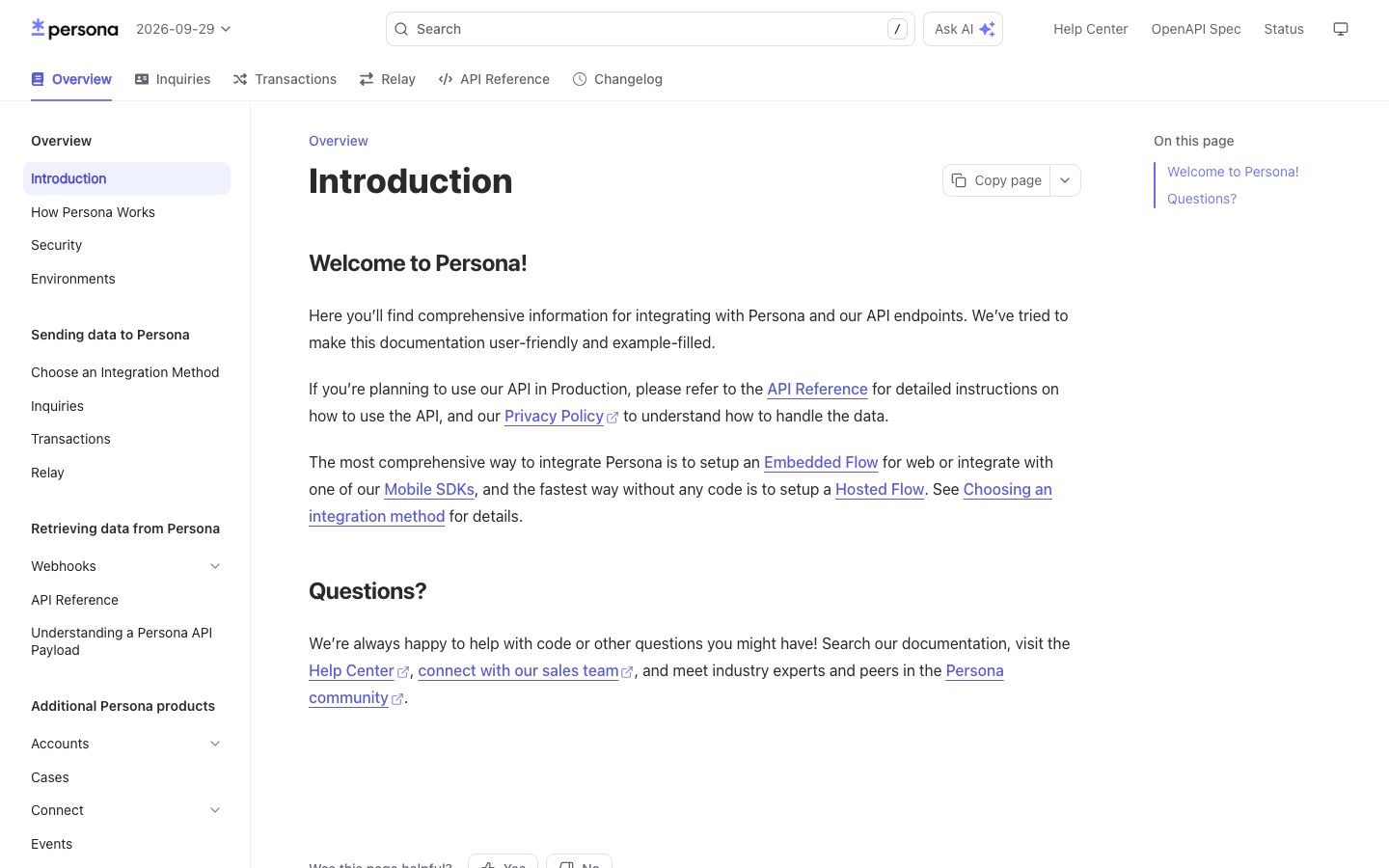
Persona's developer documentation describes three ways to integrate.

  • Hosted Flow: the fastest, and it needs no code.
  • Embedded Flow and mobile SDKs: the most complete, for web and for mobile apps.
  • API versions: its API is versioned, with documentation indexes going back to 2020.
  • Objects: the docs separate Inquiries (verifying a person) from Transactions.

Fits when: your product and engineering teams want to design their own verification flows and manage API versions over time.

Comparing with Persona specifically? See the head-to-head comparison of Stile and Persona.

Persona's developer documentation

Trulioo

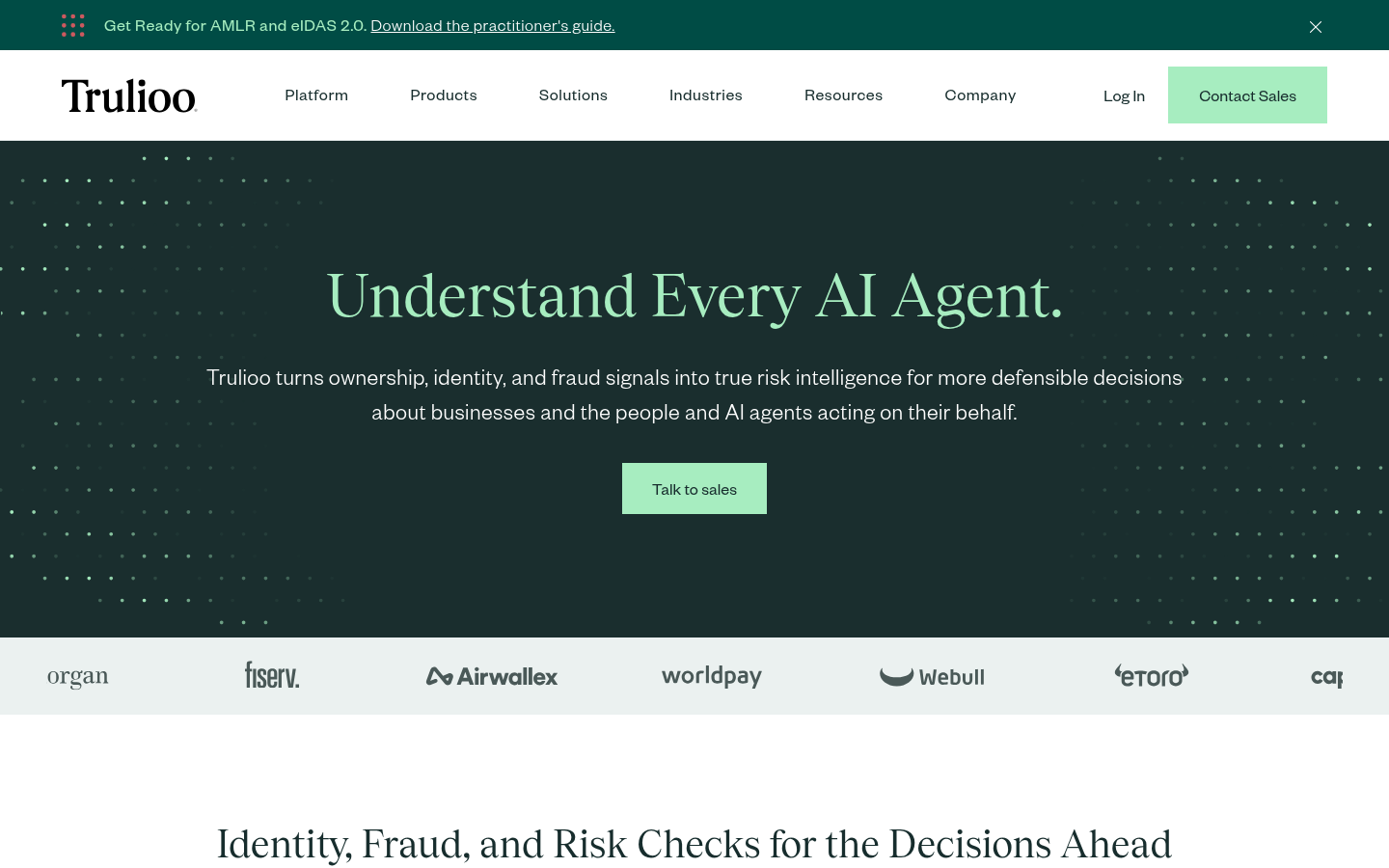
Trulioo's homepage organizes its products around identity, fraud and AML, and risk.

  • Identity: person verification, document verification, electronic identity (eID), age assurance, business verification, UBO discovery and agent verification for AI agents.
  • Fraud and AML: digital identity signals, device intelligence and AML screening.
  • Data: its platform page says it draws on more than 450 independent data partners.
  • Integration: workflows launch through the Trulioo API or a no-code/low-code hosted interface.
  • Buying: the same page promises "one end-to-end platform, one contract."

Trulioo's pricing page, as of October 25, 2026.

Fits when: you onboard both people and businesses across many countries and want data-source breadth under a single contract.

Trulioo's pricing page

Jumio

Jumio's homepage argues that "identity isn't a single moment".

It describes moving beyond point-in-time checks to continuous identity insight across the customer lifecycle, drawing on its Jumio Identity Graph.

  • Products: biometrics, identity verification, risk signals and AML screening.
  • Returning users: selfie.DONE recognizes returning users from a selfie.
  • Throughput: it says it processes 120 transactions per second.
  • Evaluation: it offers a TCO calculator.

Fits when: you run a large consumer platform and want lifecycle identity and returning-user recognition from one enterprise vendor.

Jumio's homepage

AiPrise

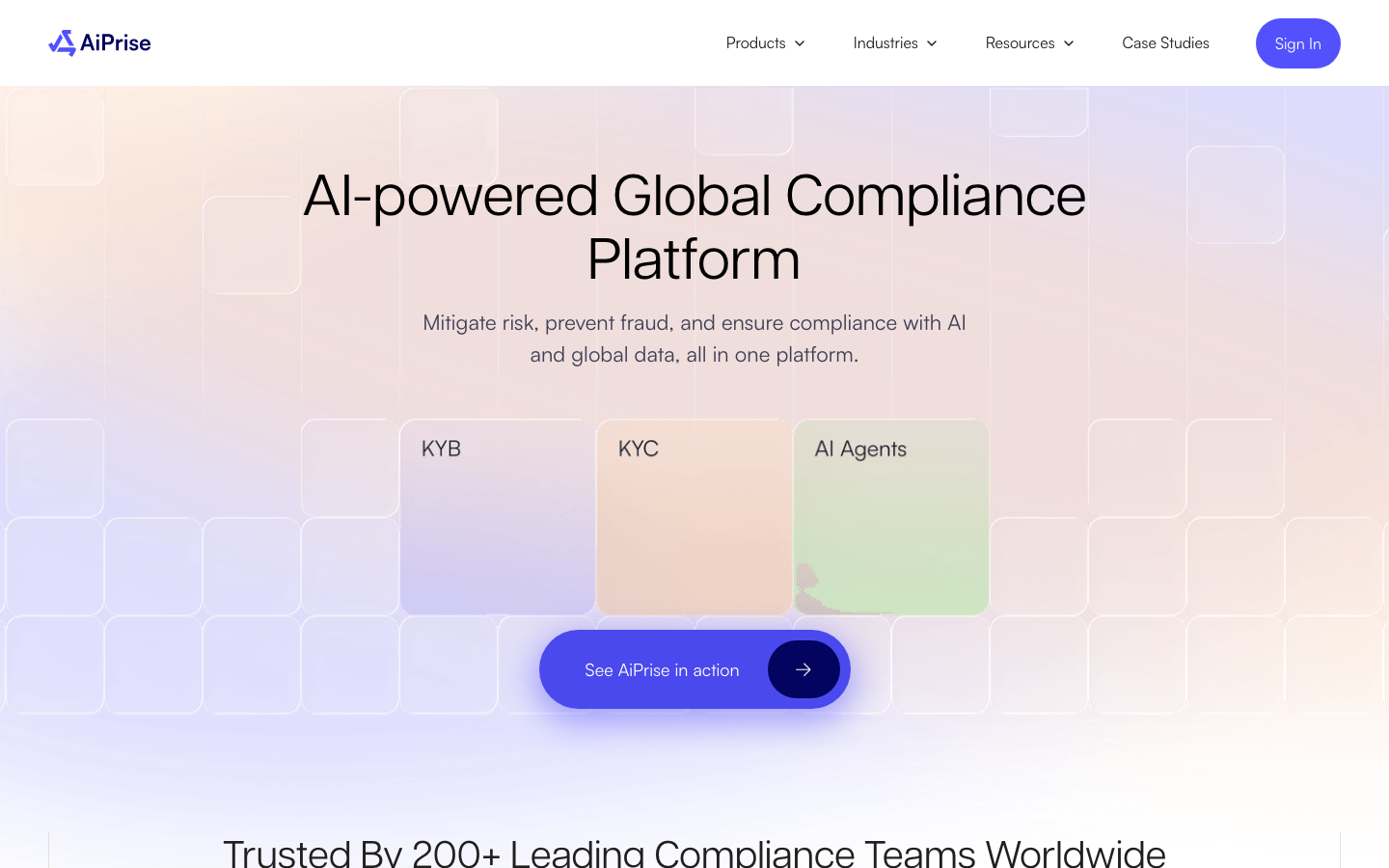
AiPrise's homepage calls it an AI-powered global compliance platform.

  • Products: business verification, user verification, fraud and risk scoring, and AI agents for AML, website and document review.
  • Features: proof of address, government verifications, case management, watchlist screening, an onboarding SDK, workflows, one-click KYC and reverification.
  • Coverage: AiPrise's own guide to Sumsub alternatives says it covers 200+ countries with 100+ data sources.
  • Business verification: the same guide says it runs registry-first.

Fits when: you are a payments, lending or stablecoin company where business verification and ownership structures are the main workload.

AiPrise's homepage

Stile

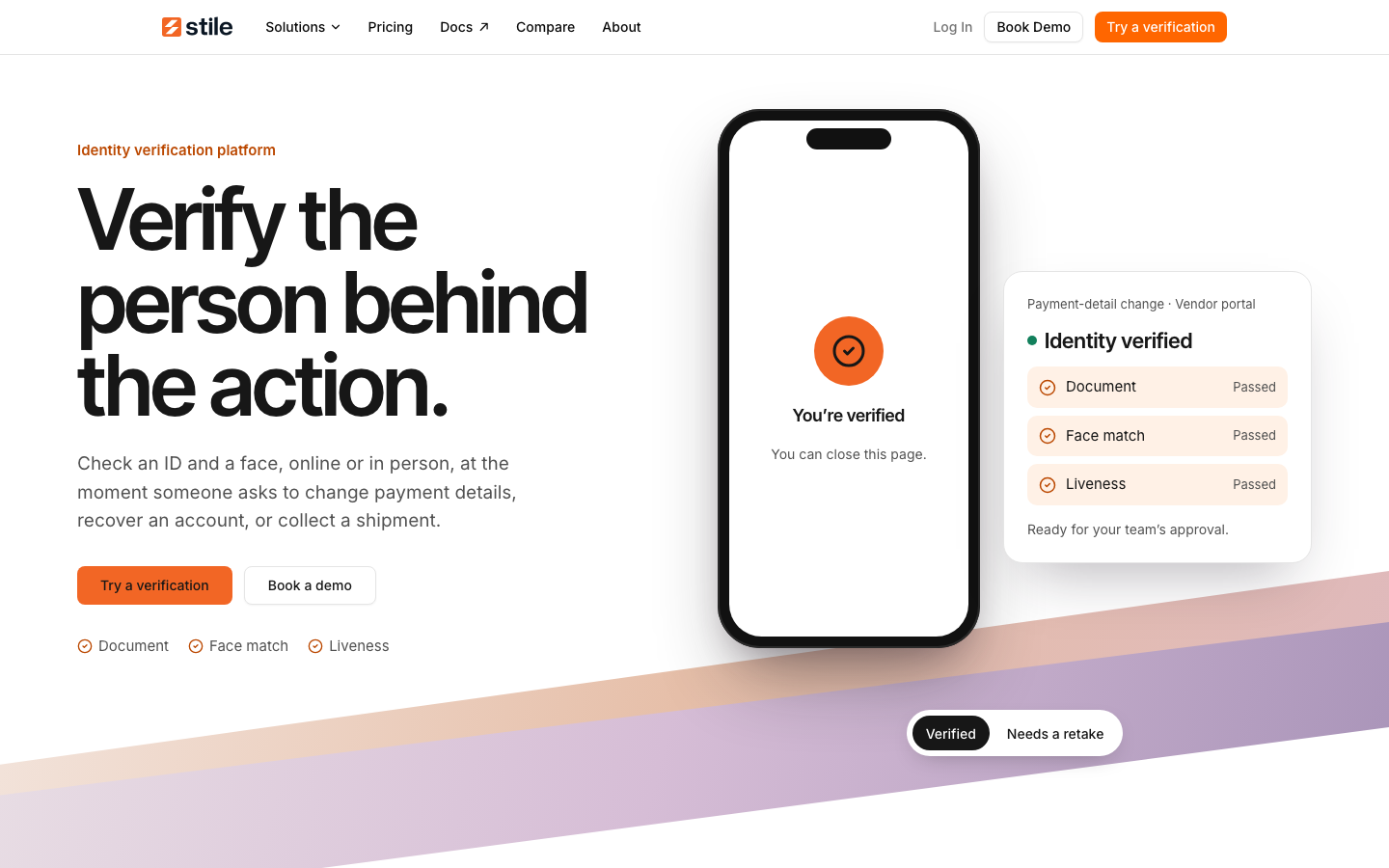
Stile is built for the moment of action rather than only for signup.

  • How it starts: an API call, a shared link or a QR code, or embed it with one script tag.
  • Where it runs: in the user's browser, with nothing to install.
  • How long it takes: about two seconds.
  • What it covers: document capture, liveness, face match, mobile driver's licenses and Apple or Google Wallet IDs, and age checks.
  • Liveness testing: tested by iBeta to ISO/IEC 30107-3 Levels 1 and 2. The glossary explains what iBeta PAD Levels 1 and 2 test.

Fits when: you need a check at payout and bank-detail changes, account recovery after a takeover attempt, age-restricted pickups, or carrier, driver or vendor onboarding, added next to the systems you already run.

Stile's homepage

What comes back

A signed webhook with an audit trail, so your existing onboarding, compliance or fraud system makes the decision.

  • Less to hold: raw ID data is deleted on completion by default.
  • What is kept: the security and data handling page explains it.
  • Dashboard: a no-code dashboard adds a drag-and-drop workflow builder, jurisdiction rules, live sessions and audit log export.

What Stile costs

  • Per check: $0.25 per full check.
  • Free to start: 1,000 free checks every month, and no minimum.
  • Current rates: Stile's pricing page lists them.

When another provider fits better

Do not pick a moment-of-action tool to replace a full regulated onboarding stack.

  • Leaving Sumsub entirely: if you need AML screening, ongoing monitoring and proof of address on the same contract, Allpass.ai, Ondato and Trulioo list all of those.
  • Business verification: if business verification and ownership are the bulk of the work, AiPrise and Trulioo lead with it.
  • Lifecycle identity: if you want lifecycle identity and returning-user recognition from one enterprise vendor, Jumio describes exactly that.
  • Your own flows: if your team wants to design every flow itself through a versioned API, Persona's documentation is built for it.

The pick

If the problem is signup, choose the onboarding platform that reads your users' documents and prices the volume you actually have.

If the problem is that verified accounts are being resold, recovered by the wrong person or used to redirect payouts, the fix is a second check at that moment, matched to the person who onboarded.

You do not need a migration for that. A per-check tool with a free monthly allowance lets you put one check on one workflow this week and measure it.

FAQ

Questions about switching from Sumsub

Still have a question? Book a demo

No. You can keep Sumsub for onboarding and add a second vendor only at payout changes, recovery or pickup. What matters is that the second check's result lands in the system that already makes the decision. A signed webhook or API response does that without a second dashboard for your analysts to work.

You still have to keep them. Allpass.ai's guide to leaving Sumsub notes that under AMLD5 regulated businesses must keep customer due diligence records for five years after the relationship ends, and that some jurisdictions require ten. Export before you switch off the old system.

Onboarding KYC cannot catch this, because the original holder is real and passes. Add a face match at the first withdrawal, on a new device and on any payout-detail change, compared against the onboarding selfie. Pair it with your own payment signals, for example a first deposit from an account in a different name.

Run a trial on your real documents, including digital IDs, paper copies and damaged cards, before you sign. A vendor's coverage map tells you a country is listed. It does not tell you that your users' version of the document passes.

Often it is the configuration. A rejection that does not name the accepted document types leaves users guessing. Ask each vendor which document types its proof-of-address check accepts in your markets and what the user sees on rejection.

That depends on the vendor's pricing model. Allpass.ai lists its plan prices on its pricing page. A pay-per-check model with a free allowance lets a developer run real checks first. The guide to integrating an identity verification API walks through what a first integration looks like.

Try a verification

If your risky moment is a payout change, a recovery request or a pickup, put one check on it and see what comes back. With Stile you can create your free account, get an API key in minutes, and run your first 1,000 checks each month at no cost.