

Do Fake IDs Scan? Why a Successful Scan Is Not Proof
Yes, many fake IDs scan. A successful scan only shows the barcode was readable, not that a state issued the card. Here is what comparing the barcode with the card catches, what it misses, and which checks to add.
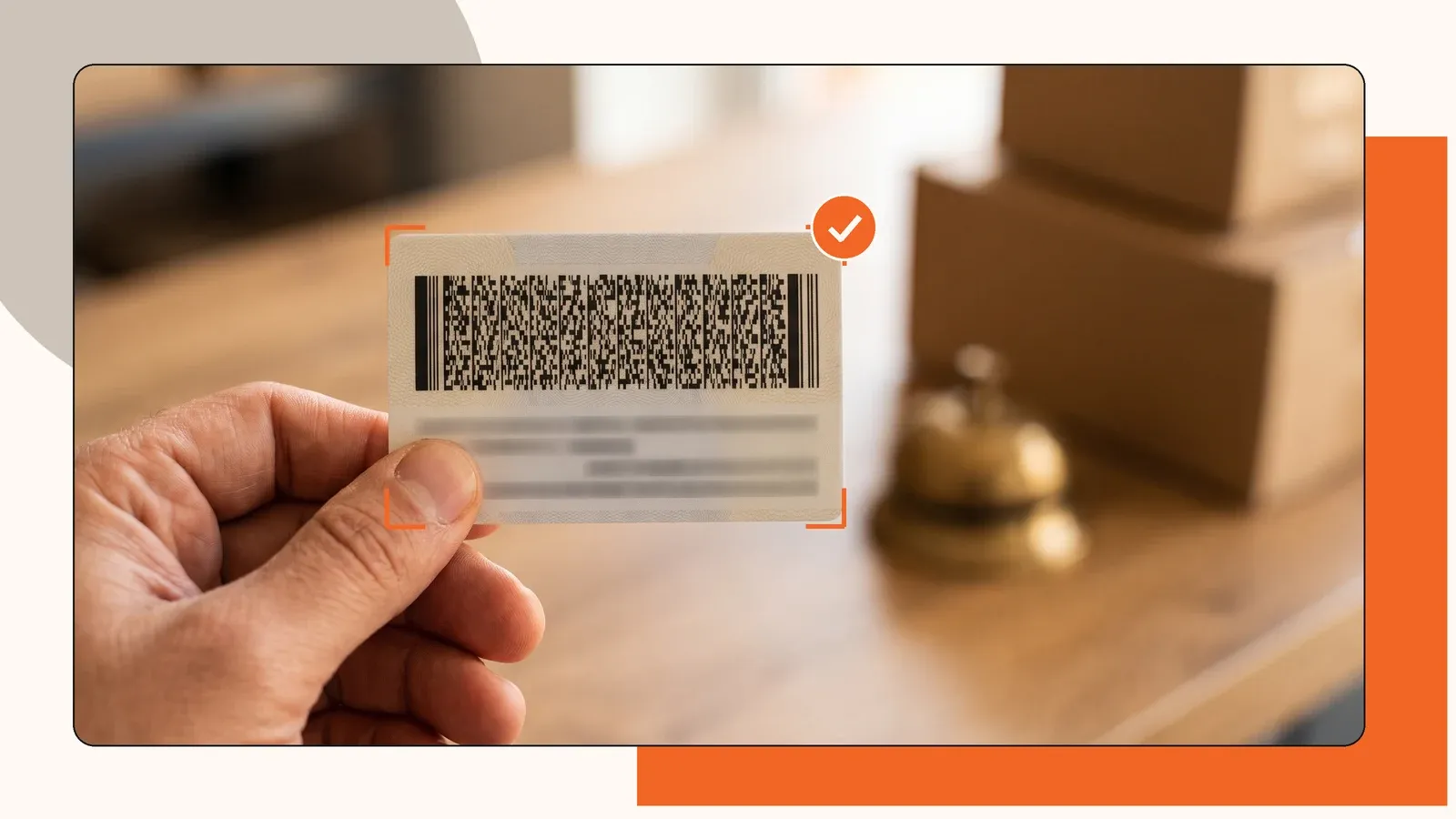
Short answer: yes, many fake IDs scan. When a scanner beeps, it means the barcode could be read. It does not mean the ID is real.
Key points
- Anyone can read the barcode on a driver's license, and on most cards anyone can make one too.
- Checking that the barcode says the same thing as the front of the card catches a lot of fakes.
- A well-made fake can match on both sides, so you still need to look at the card itself and the person holding it.
- If the two sides do not match, look again before you call it fraud.
This guide is for teams that check IDs, or that are choosing a company to do it for them. New to the topic? Start with how ID scanners work.
Why fake IDs scan
The barcode on the back of a US or Canadian driver's license is not a secret code. States follow a shared design standard from AAMVA, the association of motor vehicle agencies. That standard says the barcode must not be scrambled, so that police and businesses can read it.
This is on purpose, but it has a downside. If anyone can read a barcode, anyone can copy one or make a new one. On most cards, nothing in the barcode shows who made it. Think of it as a label, not a seal.
The people making fakes know this
In July 2020, US Customs and Border Protection reported seizing 19,888 counterfeit US driver's licenses in 1,513 shipments at Chicago O'Hare's mail facility in the first half of that year. One detail stood out to the officers:
"The bar code attached to the Michigan licenses worked."
And plenty of people use them
In one study that followed 1,015 students at a large public US university, 66.1% said they had used a false ID at least once during college.
That is one campus, not the whole country. Still, it helps explain why staff at the door or the counter may see fakes regularly.
"It scanned" can mean very different things
A product can say an ID "scanned" after doing a little or a lot. There are four levels. Each one answers a question, and each one leaves something unanswered.
- Reading the barcode. Can we read what it says? That is all this tells you.
- Comparing front and back. Does the barcode say the same thing as the front of the card? A fake can still agree with itself.
- Checking that the data makes sense. Do the dates add up, and is the barcode set out the way that state sets it out? This still cannot tell you whether the card is real, or whose it is.
- Checking the card and the person. Does the card look tampered with, and is the person in front of you its owner? This goes furthest, but no check covers everything.
A basic age-check scanner often stops at the first level. If the barcode on a fake says the holder is 23, the scanner says 23.
What comparing the barcode with the card catches
Three checks do more than show what the barcode says. A provider may run one, two or all three:
- Front-to-back comparison, often called crossmatching. If the name or date of birth on the front is different from the barcode, the card may have been altered, or the barcode may have been copied from another card.
- A sense check. Does the barcode data add up on its own? An expiration date earlier than the issue date does not.
- A layout check. Each state sets out its barcode in its own way. A barcode that names one state on a card from another state is a warning sign.
Altered cards and cheap fakes often fail here. Changing what is printed on the front does not change what is stored in the barcode.
A mismatch is not proof of fraud
A mismatch is a reason to look again, not a verdict.
Real IDs fail this check too. Glare, a cropped photo, one misread letter, a date written in a different order, or a long name shortened to fit the card can all cause a mismatch. Ask for a new photo or have a person review it before treating it as fraud.
What a matching barcode misses, and what else you need
A barcode that matches the front does not prove the ID is real. Two situations get past barcode checks on their own:
- A carefully made fake can have a barcode that matches its front perfectly.
- A real card can be handed over by someone who is not its owner.
What independent testing found
In 2025 the US Department of Homeland Security ran a test called the Remote Identity Validation Rally. Seven commercial systems looked at phone photos of real and fake IDs. The share of fake IDs wrongly accepted ranged from under 0.88% to under 76.68%, depending on the system.
A DHS feature article in June 2026 summed it up: checking traditional ID documents "didn't perform particularly well", and matching a selfie to the ID was the most successful method. Stile was not part of that testing.
What to add on top
- Checking the card image. Software looks at the photo of the card for signs of tampering, or a design that does not match the state it claims to be from. See identity verification.
- Checking the person. A liveness check confirms a real person is in front of the camera. A face match compares that person with the photo on the card, which helps with borrowed and stolen real IDs.
- State signatures. A few states now sign the barcode on their newer cards. A signature works like a tamper-evident seal: anyone can still read the data, but software can confirm that it came from the state and has not been changed. Our explainer on California's driver's license digital signature covers what that proves and what it does not.
- Mobile driver's licenses. A license stored on a phone carries data signed by the state. How current that data is, and whether the license is still valid, depends on how it is checked. See digital ID verification. Availability depends on the state, wallet, and device.
Each of these answers a different question. Our identity fraud protection page shows which one helps with which kind of fraud.
In-person versus remote checks
In person
Staff hold the card. They can feel it, tilt it, and compare the photo with the customer.
A scanner adds speed, but the risk is the green light. If the scanner only reads the barcode, staff may trust a result that checked very little. Pair the scanner with a front-to-back comparison, even one done by eye, and make sure staff know what a pass does and does not mean.
Remote
Nobody holds the card. The system only sees a photo, so there is nothing to feel or tilt, and the person sending it may not be the owner.
That makes the other checks matter more: the front-to-back comparison, the card image check, liveness and face match, or a signed digital ID. This is true for online age verification as much as for opening an account.
In both settings
States redesign their cards. Old and new versions are in use at the same time, and a system that only knows one of them may reject real cards. Our Florida redesign readiness check shows how to prepare.
The rules also differ from state to state, so check what applies in your US jurisdictions.
Questions to ask an ID verification provider
- When your product says an ID "scanned" or "passed", what exactly did it check?
- Do you only read the barcode, or do you also compare it with the front of the card?
- Which details do you compare, and what happens when they do not match: reject, ask for a new photo, or send to a person?
- How do you handle states that have several card designs in use at once?
- Is the barcode read on your own servers, or do you trust a result sent from the customer's phone?
- How do you check that the person is the owner of the card, and has that been independently tested?
- Do you accept mobile driver's licenses, and in which states?
Common questions
Can fake IDs scan?
Yes. Many fake licenses have a barcode that a scanner can read, and what it says can look normal. That is why fakes can pass scanners at bars and stores that only read the barcode and work out the age. A scan tells you the barcode can be read. It does not tell you the card is real.
How do you detect a fake ID that scans?
Use more than one check. Compare the barcode with the front of the card, look at the card or its photo for signs of tampering, and make sure the person matches the photo on the card. No single check is enough, and anything unclear should go to a person to review.
Does a failed scan mean the ID is fake?
Not necessarily. Worn cards, glare and damaged barcodes can stop a real ID from scanning. If a barcode will not read, try again, then check the card another way before deciding anything.
What is a signed barcode?
A signed barcode carries a digital signature from the state that issued the card. It works like a tamper-evident seal on the barcode's data. Anyone can still read the data, because it is not encrypted. What the signature adds is a way to check two things: that the data came from the state, and that nothing in it has been changed since. If even one character is edited, or someone else made the barcode, the check fails.
Only some states and newer cards have one, and it covers the barcode data only. It says nothing about the printed text or the photo, and a genuine signed barcode can still be copied onto another card.
Share this article