

Florida’s New Driver License Design: A Five-Step Readiness Check
Florida is issuing a new card design while older driver licenses and ID cards remain valid. Verification teams should prepare to accept both without mistaking an unfamiliar layout for fraud.
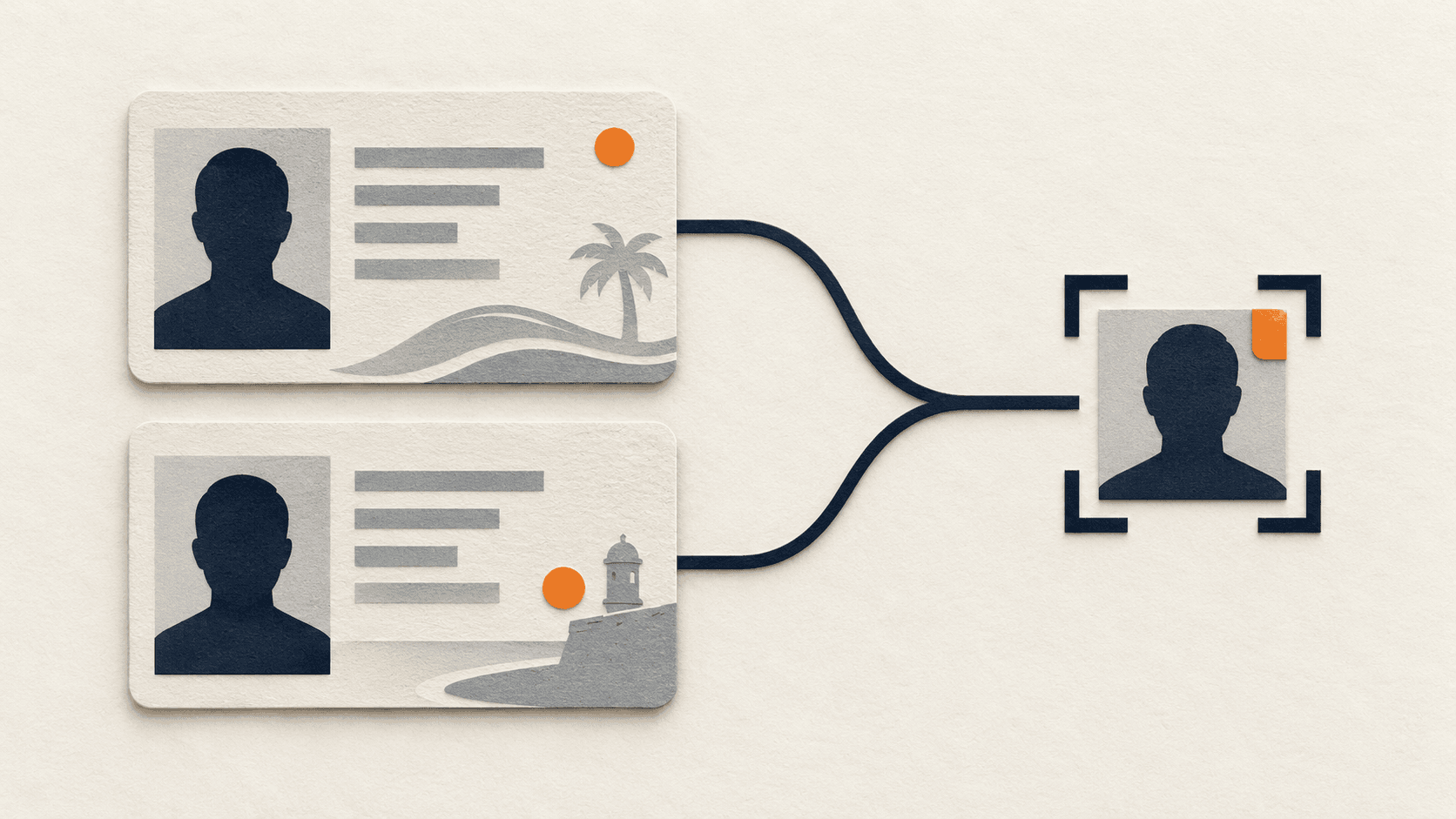
Florida began issuing redesigned cards at service centers on September 30, 2026. As of October 3, the state expected online ordering to become available by early November. Existing cards remain valid until expiration if they are otherwise valid, and cardholders do not need to replace them early solely because the design changed, according to FLHSMV’s official bulletin.
That overlap creates a practical risk for businesses. If a verification system or manual-review guide recognizes only the older design, legitimate customers may be asked to retry, sent to review, or rejected. Teams that accept Florida credentials should test the new design before it becomes common in their workflows.
What changed on Florida’s new cards?
The new artwork includes Castillo de San Marcos, an orange, a manatee, an alligator within the REAL ID star, and Space Shuttle Discovery. FLHSMV also identifies the state-seal image as an enhanced security feature. Certain commercial driver licenses and commercial learner permits include a “Temporary Non-Domiciled” marking, according to FLHSMV’s official bulletin.
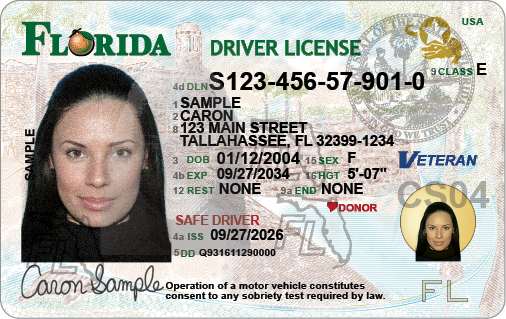
2026 design, front. Official sample with SAMPLE markings preserved. Source: FLHSMV.
For verification teams, the important change is not the artwork itself. It is the possibility that existing document rules, templates, or reviewer references no longer match what a legitimate Florida card looks like.
A five-step readiness check
1. Confirm support for the exact design
Ask your verification provider or internal document team whether the September 2026 Florida design has been tested.
A general statement that Florida is supported may refer only to an earlier card. Record the library, model, or service version used during testing so the team can reproduce results and track future updates.
2. Test the real capture experience
Run approved test materials through the same path customers use. Test both the front and back, including common problems such as glare, rotation, poor framing, and unreadable images.
Check whether the flow:
- Recognizes the new card
- Requests the correct sides
- Extracts the expected fields
- Gives a useful retry when the image is poor
- Routes unresolved cases to the right review process
An official sample is useful for understanding the design. It does not show how a production card will perform in every camera, device, or verification system.
3. Check printed and barcode data
Where the printed card and barcode contain corresponding information, confirm that the system reads and compares it correctly.
A successful barcode read means the data was decoded. Matching fields can help identify inconsistencies, but they do not by themselves prove that the card was issued by Florida. Keep that limitation in the test plan rather than presenting a barcode match as complete authentication.
California provides a separate process for verifying a digital signature in the PDF417 barcode on its credentials. Florida’s redesign announcement does not document the same mechanism, so teams should not apply California’s process to Florida cards without Florida-specific documentation. Technical readers can review the California implementer guide and Stile’s California driver license explainer.
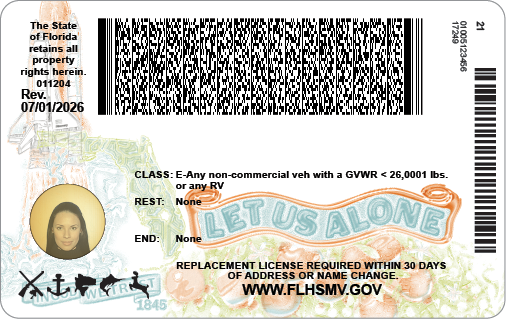
2026 design, back. Official sample showing the barcode location. The sample artwork does not establish the capabilities of a production barcode. Source: FLHSMV.
4. Give different failures different responses
An unfamiliar design, a blurry image, unreadable data, inconsistent fields, and a failed authenticity check are different problems. They should not all produce the same “fraud” result.
Review the experience for each outcome. A customer may need another capture attempt, a different document, or manual review. Clear responses help legitimate customers recover while preserving the organization’s normal fraud controls.
Manual reviewers need updated references too. A current automated system will not solve the problem if the person handling exceptions sees only the older design.
5. Monitor the transition
Track what happens as the new cards become more common. Useful measures include capture retries, recognition or extraction failures, and manual-review outcomes.
Where the card generation can be identified reliably, compare results for the older and new designs. Investigate unexpected changes before adjusting acceptance rules.
Keep the older-card path active throughout the transition. A familiar design should still go through the normal checks, while an unfamiliar design should not be rejected solely because it looks different.
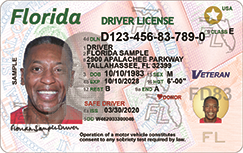
Earlier design: August 2020. Compare it with the 2026 front above. An older design alone does not invalidate an otherwise valid credential. Source: FLHSMV.
A note on commercial credentials
The “Temporary Non-Domiciled” marking appears on certain commercial driver licenses and commercial learner permits. Read and route the marking accurately, but do not treat it as a fraud signal or infer a person’s current immigration status from it. Identity verification also does not establish current commercial driving privileges. Teams responsible for driver qualification should follow current FMCSA guidance and their established licensing-review process.
Where identity verification fits
A document check is one part of deciding whether to trust a transaction. The business may also need to confirm that the person presenting the card matches the document and the expected customer, worker, or driver.
Stile’s identity verification flow helps businesses collect document and presenter evidence. The business then applies that result to its own account, transaction, pickup, or review decision.
For logistics workflows, identity evidence can support onboarding or pickup checks. It does not determine driving privileges or authorize a shipment release. Those decisions remain part of the customer’s own process.
Frequently asked questions
Is an older Florida driver license still valid?
Yes, if it is otherwise valid. Florida says existing cards remain valid until expiration. An older appearance alone should not cause a rejection.
Do Florida residents need to replace their licenses?
No. Florida does not require replacement solely because the card design changed. Cardholders should follow the normal renewal or replacement process when it applies.
Does the new design change how businesses should verify identity?
The basic job remains the same: inspect the document using supported checks, confirm the presenter when the workflow requires it, and send unclear cases through an appropriate review process. The immediate task is to make sure the new design does not fail because a system or reviewer expects only the older layout.
What to do next
Ask your provider or document team whether the September 2026 design has been tested. Then run both card designs through your complete customer and review flow before changing acceptance rules.
If you are reviewing your broader identity process, Stile’s identity verification overview explains how document and presenter evidence can fit into an application’s decision flow.
Share this article