

When Identity Verification Creates More Risk
A driver said no to a broker's identity verification request for a selfie, truck records, and a CDL. Both sides saw a different kind of danger.
A driver opens a message from a freight broker. It is not a pickup number or a quick check-in. It is a list:
- Fill out a verification form
- Take a selfie beside the truck
- Send the truck VIN, registration & cab card
- Photograph both sides of the commercial driver's license (CDL)
By the end, this no longer feels like routine dispatch but a stranger building an identity file for a background check.
The driver posted a screenshot on Reddit, r/FreightBrokers with the title “Respectfully,” and rejects the request bluntly. The driver's risk is easy to see, but as always there is nuance, the risk to the broker is no less real. How do two people that have never met before, establish trust and confirm that they are indeed dealing with someone who they claim to be.
The broker's problem
In freight brokerage, never meeting the driver is normal. The broker vets and hires a carrier as a company, then relies on databases, phone calls, emails, and paperwork to make sure the people moving the load really belong to that carrier.
The problem is that a legitimate carrier can have its information stolen. An imposter can use the real company's name, USDOT number, contact details, and paperwork to pass early checks, book a load, and send a truck that has nothing to do with the carrier the broker approved.
FMCSA warns that freight fraud can involve the unauthorized use of another carrier's USDOT number. By the time the truck arrives, the company record may be real while the people presenting it are not. If nobody catches that mismatch, the broker may not learn the truth until the cargo is gone.
Seen from the broker's side, the checklist has a logic. The selfie connects the driver to the truck. The cab card and registration connect the truck to a carrier. The license says who is behind the wheel. Together, those pieces are meant to show that the right person, company, and equipment have arrived.
It is a makeshift chain of proof. The goal is easy to understand. The method shifts risk from the broker to the driver.
What the driver sees
The broker sees a load that could be stolen. The driver sees a remote business asking for a copy of nearly everything on a commercial license.
The broker is not the driver's employer. This may be a one-load relationship between people who have never met. Yet the request includes a name, address, birthday, photo, signature, license number, truck, and carrier.
The driver probably does not know who can open those files, where they are stored, or when they will be deleted.
The broker is trying to keep the cargo from being stolen. The driver is trying to keep an identity from being stolen. Both concerns are real, but the checklist protects one side by asking the other side to surrender control of sensitive information.
Where the files go
If the driver agrees, the photos are emailed back to the broker. The broker may forward them to a shipper or warehouse to compare the files with the driver and truck that arrives for pickup. During the load, this can look like ordinary coordination.
The files do not disappear when the freight is delivered. They may remain in Gmail inboxes, forwarded email threads, download folders on multiple PCs, shared drives, backups, and employees’ personal phones. Every new load adds another license, address, signature, selfie, and set of truck details to that growing archive.
Months or years later, nobody may remember why a particular file was collected or who still has access to it. An employee may leave with copies on a personal device. A shared inbox may be compromised. A backup may preserve documents that everyone assumed were deleted. What began as a quick check for one load becomes a long-term collection of sensitive driver information. If one inbox, phone, or account is compromised, that archive can become raw material for impersonation.
When old files make a scam believable
An attacker who gains access to those files no longer has to guess. The driver’s real name, email, phone number, carrier, home address, license information, truck details, and recent load may all be sitting in the same email thread. Those details can be woven into a message that looks like ordinary freight business.
A fake request to confirm an account or resend a document is more convincing when it contains accurate information. The FTC describes this kind of targeted email as spear phishing.
This is not a claim that the broker in the Reddit post caused an attack. There is no evidence of that. The risk is that the documents remain valuable after the original check is over. The broker needed them for one load; an attacker could reuse them to impersonate the driver long afterward.
The answer matters more than the copies
Before any files are sent, one question matters: what does the broker actually need to know?
The broker may need to know that a real person completed a check, name matched to the rate confirmation, that the face matched the CDL, and when or where the check happened.
Those are answers. They do not always require the broker, warehouse, and operations team to keep their own copies of the driver's license.
NIST's privacy guidance for identity proofing says systems should use only the personal information needed to check identity, fight fraud, and provide the facts required for a decision. In plain English: collect less when less will do the job.
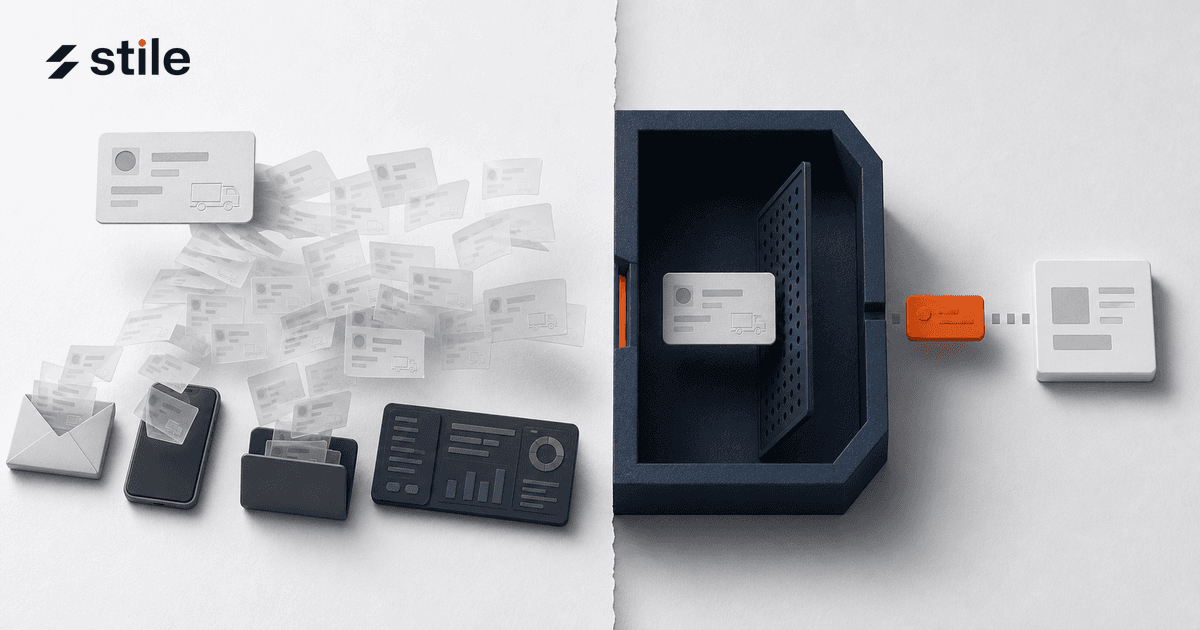
A purpose-built verification service can check the evidence in one controlled place. The business receives a signed result and a transaction reference. The broker gets a record of the check, but the raw license photos do not have to travel through every system involved in moving the load.
The security job gets smaller. One system can limit access, enforce a short retention period, and delete the evidence on schedule. Everyone else keeps the answer, not another folder full of IDs.
Identity is only half the check
Even a perfect identity check cannot prove that the person should receive the freight.
A verified person is not automatically an approved carrier, assigned driver, account owner, or freight recipient. Identity verification for logistics can confirm the person at the handoff. The broker, shipper, transportation system, or warehouse must still connect that person to the approved carrier and load.
Identity verification answers, “Who completed this check?” The shipper and broker still answer, “Should this person get the load?”
Keeping those jobs separate prevents a useful identity result from being stretched into a promise it cannot make.
A smaller, safer check
Before sending another request for ID photos, the business should stop and ask:
- Can this request no be sent via email or text?
- What does the broker need to confirm before releasing the load?
- Can a verification result replace the raw document?
- Who truly needs access to the evidence?
- How soon can the evidence be deleted?
- Can we keep proof that the check passed instead of another copy of the ID?
The driver’s refusal came down to a simple question: why should protecting the broker’s load require the driver to put their own identity at risk?
The broker's fear of cargo theft is real. So is the driver's fear of identity theft. A better identity check does not protect one side by putting the other in danger. It proves what matters, keeps the raw data from spreading, and leaves the final business decision with the people responsible for the load.
Verify the person without turning their ID into another file your team has to protect.
Share this article