

Developers Guide to Age Verification: Build vs. Buy
A practical developer guide to age verification build vs buy decisions, covering compliance drift, PII exposure, fallback methods, trust management, and when in-house infrastructure makes sense.
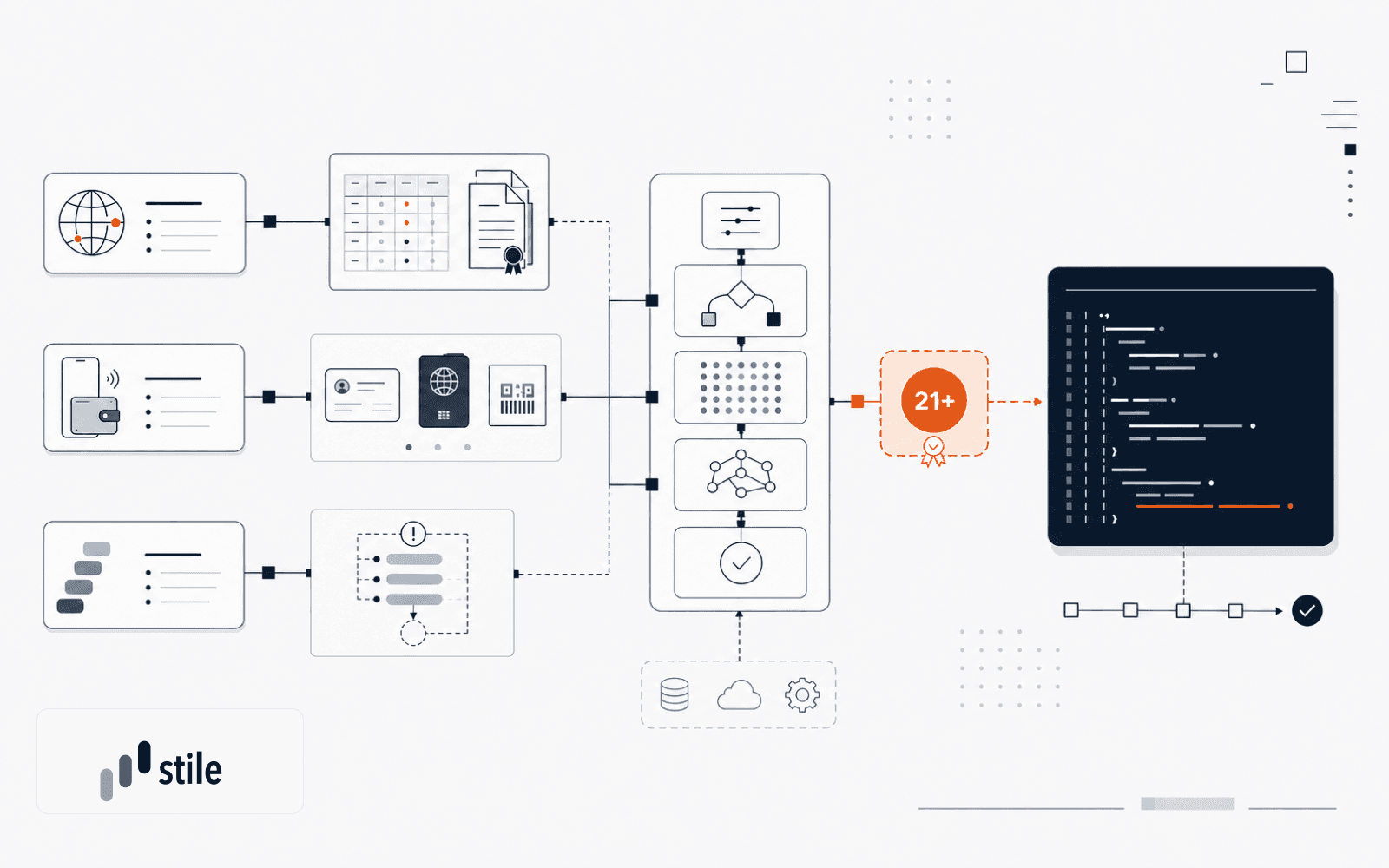
If you are building in a regulated category today, age verification is no longer an optional speed bump. For alcohol delivery, age-restricted eCommerce such as: igaming, CBD, vape sales, adult content and other age gated flows, verification is now part of checkout or onboarding.
The first instinct for engineers when they encounter a problem is often to build a solution. On the surface, age verification can look like a weekend project: collect a date of birth, call a document API, store a result, and move on.
That is rarely where the work ends. As age-verification obligations spread across more categories and jurisdictions, the gap between a verification project and compliance infrastructure keeps widening. This guide is a practical look at when to buy, when to build, and what engineering teams should be honest about before committing either way.
Reasons to buy
Most developers choose a vendor not because they cannot build the first version, but because they do not want to own the operational debt that comes with it.
1. Fallback coverage is half the work
Mobile driver’s licenses and wallet-based credentials are the cleaner long-term path. They can reduce the amount of personal data a merchant touches, and both Apple and Google now document wallet-based identity flows for age or identity verification.
But production coverage is still uneven. Not every user has an eligible mDL provisioned. Not every platform path is identical. Google Wallet’s online acceptance docs, for example, describe both sandbox testing and go-live access requests for relying parties. Apple also requires the correct Verify with Wallet entitlement before an app can request identity data from Wallet.
If you ship only the newest credential path, you will still need a fallback plan for users who cannot complete that path. In practice, that means supporting a blend of:
- Document capture
- Barcode and OCR checks where applicable
- Liveness and face match for higher-risk flows
- mDL or wallet-based credential verification
- Jurisdiction-specific age-tier resolution
- Signed server-side completion events
Stile packages those primitives behind one API and a hosted verification flow, so the merchant integration stays narrow: create a session, send the user through the flow, verify the signed webhook, and grant access only after your backend confirms the result.
2. Trust management is not a one-time task
Age verification is not just reading a value from an ID. The hard part is deciding whether the source can be trusted.
For digital credentials, that means handling issuer certificates, trust lists, credential formats, signatures, revocation state, device binding, and verification semantics. AAMVA’s Digital Trust Service publishes a Verified Issuer Certificate Authority List (VICAL) for relying parties, and that list is updated as issuing authorities are added.
In theory, this is just infrastructure. In practice, it becomes a permanent ownership area:
- Load and refresh issuer trust material.
- Validate credential signatures and certificate chains.
- Handle revocation and key rotation.
- Track which issuers and roots are valid.
- Keep verification code current as wallet and standards support evolves.
That work can be worth owning if identity is your core product. If it is not, it is usually expensive context to keep in your engineering organization.
3. Relying-party onboarding is part of the integration
Wallet-based identity flows are not just SDK calls. A relying party often has to register, request access, accept terms, configure business identity, and supply privacy and branding details that will be shown to the user.
Google’s Verify with Google Wallet docs require an access request before going live. Apple’s Verify with Wallet path requires entitlement setup for the requested document types. Those are normal platform controls, but they are still work your team has to sequence, monitor, and renew as requirements change.
A vendor amortizes that process across customers. You still need to understand your compliance posture, but you do not need to become the direct owner of every wallet and issuer relationship before you can ship.
4. PII liability drops when raw attributes stay out of your app
If your database receives a raw name, date of birth, address, document number, document image, or biometric template, you now own the security and compliance burden for that data.
For many age-gated products, the app does not need those raw attributes. It needs an eligibility decision it can trust.
That is the default shape Stile is designed around: the merchant creates a verification session, the user completes the hosted flow, and the backend receives a signed eligibility result and session pointer. In the standard age-verification case, your product code can act on a value such as age_tier: "over_21" without storing the underlying document image, date of birth, or biometric template.
That reduction matters. Less PII crossing the integration boundary means less breach exposure, less retention surface, and fewer systems that need to be audited for sensitive data handling.
5. Compliance drift becomes product work
State age-verification rules are moving quickly. Texas HB 1181, Louisiana Act 440, and Utah SB 73 are representative examples of how different states keep adding or amending obligations around age-restricted online access.
The engineering implication is straightforward: if you build age verification in-house, your code eventually needs to answer questions like:
- Which jurisdiction applies to this session?
- What age threshold applies to this use case?
- Which verification methods satisfy the rule?
- What data can be retained, and for how long?
- What artifact would counsel produce during an inquiry?
Those answers change. They also need legal review. A good vendor does not remove your obligation to understand the law, but it should keep the rule engine, retention semantics, and audit artifacts from becoming scattered if statements across checkout.
This is engineering analysis, not legal advice. Have counsel review the regulated categories and jurisdictions that apply to your product before launch.
Reasons to build
There are real cases where building in-house is the correct architectural decision.
1. Your volume changes the math
If you are doing tens of millions of checks a year, unit economics can justify a dedicated identity team. Vendor pricing that is reasonable at early scale can become material once verification volume is large and predictable.
At that point, the comparison is not “vendor fee versus one engineer.” It is vendor fee versus the fully loaded cost of a team that owns capture UX, trust management, fraud tuning, compliance updates, audits, incident response, issuer relationships, and roadmap maintenance.
If that team is already part of your core operating model, building may be rational.
2. You need raw attributes downstream
The zero-PII default is not right for every product.
If your product genuinely needs the user’s verified name, address, document number, date of birth, or other attributes for downstream workflows, you may need a different integration shape. That could mean configuring a vendor to release specific attributes, calling an evidence-bundle API for reviewed workflows, or building your own ingestion and retention pipeline.
The key is to be explicit. Do not collect raw identity data because it is available. Collect it only when the product, regulator, or risk model actually requires it.
3. Identity is the product
If identity verification is your primary product surface, you may need to own the flow end to end.
A marketplace, lender, logistics network, or regulated commerce platform can usually treat verification as infrastructure. A company selling identity infrastructure cannot. If your differentiation depends on proprietary capture UX, issuer coverage, credential intelligence, or risk scoring, a third-party widget may sit too close to the core product.
In that case, building is not a distraction. It is the business.
4. You need sovereignty over the trust path
Some enterprise contracts and regulatory environments require full control over the data path. That can include where evidence is processed, who can decrypt payloads, which issuer roots are trusted, how long audit artifacts exist, and whether a third party is allowed in the verification chain at all.
If the answer is “no third party in the trust path,” then in-house ownership may be the only acceptable architecture.
The practical decision
Buy if age verification is a feature you need so your real product can ship. If your goal is to sell alcohol, gate age-restricted content, onboard a regulated merchant, or protect a marketplace, you probably do not want to build identity infrastructure before you can start learning from users.
Build if identity verification is the product, if your scale supports a permanent identity team, or if your contracts require full sovereignty over the trust path.
If you build, plan to maintain it like infrastructure. If you buy, choose a partner that respects your stack and leaves your app with the smallest possible surface area: create the session, send the user through verification, verify the signed webhook, and store only the result your product actually needs.
Stile is built for that second path: document capture, liveness, face match, mDL, jurisdictional age-tier resolution, and signed webhooks through one developer-first integration.
Start with the verification sessions API, wire up webhook signature verification, then use the testing guide before moving a regulated flow into production.
Share this article